
Wyoming turkey hunters urged to hunt lower as birds move to creeks and fields
Last updated: November 26, 2026
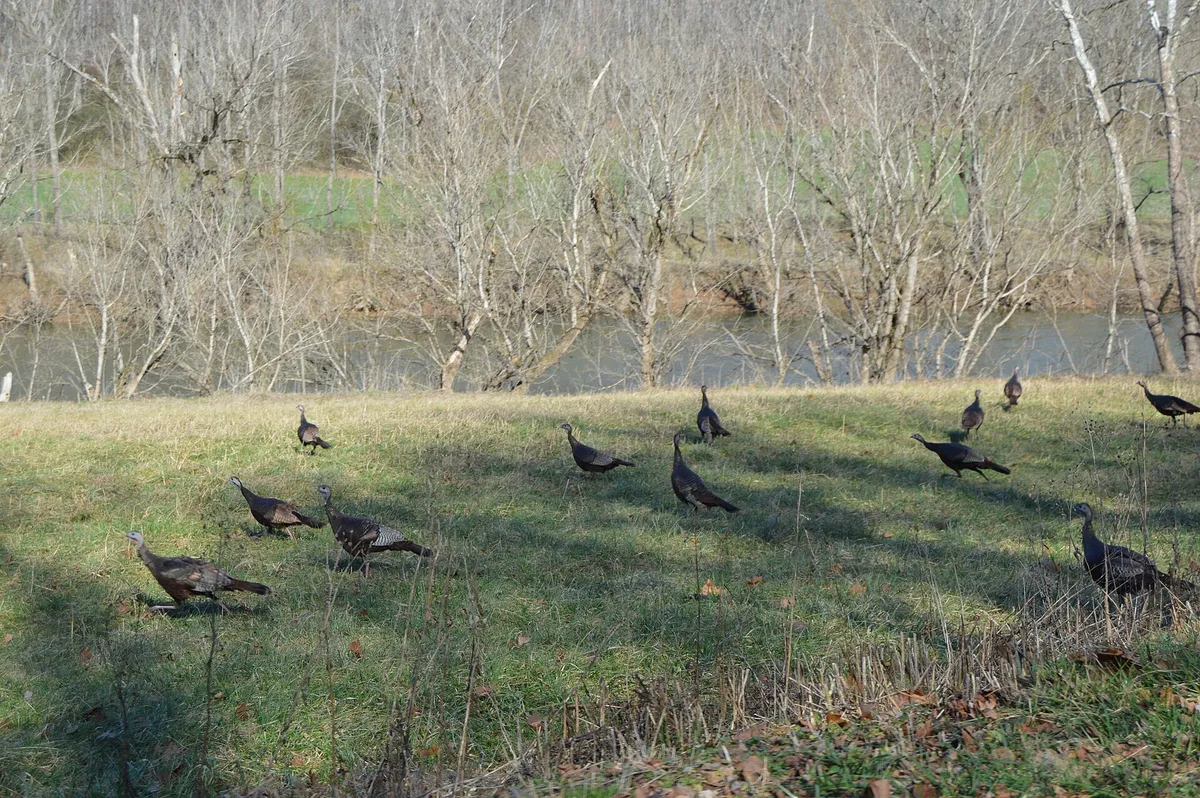
With wild turkey season open across Wyoming, hunters should focus on middle and lower elevations as fall gives way to early winter, said Brandon Werner of the Wyoming Game and Fish Department.
Werner is the department's Casper Region wildlife management coordinator and chairs its wild turkey working group. He said birds are on the move this time of year.
"Wild turkeys often migrate in Wyoming from the mountains and foothills to lower elevations to winter along agricultural fields, creeks and river bottoms," Werner said in the department's turkey tips for Wyoming hunters.
In 2025, 2,488 hunters took 1,104 turkeys in Wyoming. Wyoming has both a fall and a spring season.
Finding where the birds sleep and eat comes first. A "useful hunting tactic is to find roost trees and feeding locations," Werner said, since turkeys can be patterned as they travel between the two.
Hunters can wait between where the birds roost and where they feed. They need camouflage and the patience to sit very still.
Breaking up a flock is another approach, either by scaring the birds apart or by sending a dog in. Because these groups are often families, hunters can call them back with a keekee run, a call that takes practice. Decoys set out while calling from a hidden spot can also work.
Before going out, hunters should read the game bird and small game regulations on the Game and Fish website, the department said.
Wild birds carry less fat than domestic turkeys and tend to be drier. Plucking instead of skinning keeps in moisture and adds flavor, according to the department.
A cooking bag helps a bird hold its juices, and so do brining and smoking. Another trick is to lay strips of bacon across the breast, cover it with foil and pull the foil off a few minutes before serving.
Diet shapes most of the taste. Through fall and winter, Wyoming turkeys eat hard mast such as ponderosa pine seeds and burr oak, along with chokecherry, plums and currants.
Turkeys are not native to Wyoming. In 1935, Game and Fish traded sage-grouse to New Mexico Game and Fish for 15 Merriam's turkeys.
Those 15 birds were let go that spring on the George Waln Ranch on Cottonwood Creek in Platte County, and from there they spread into the Laramie Mountains.
Twelve years later, Game and Fish put the flock at more than 1,000 birds. That population supplied the transplants that carried turkeys to the rest of the state.
You Might Also Like
- Wardens seek tips on headless mule deer buck shot illegally near Cokeville
- Student artists can enter Wyoming's tiger salamander stamp contest through April 9
- Anglers get a say Dec. 2 on the yearly fishing closure below Fontenelle Dam
- Wyoming drivers on 511 Notify now get wildlife crash and migration alerts